El Madroñal | Benahavís
Article by Raquel Santafe · last update 27/07/2026
In Summary
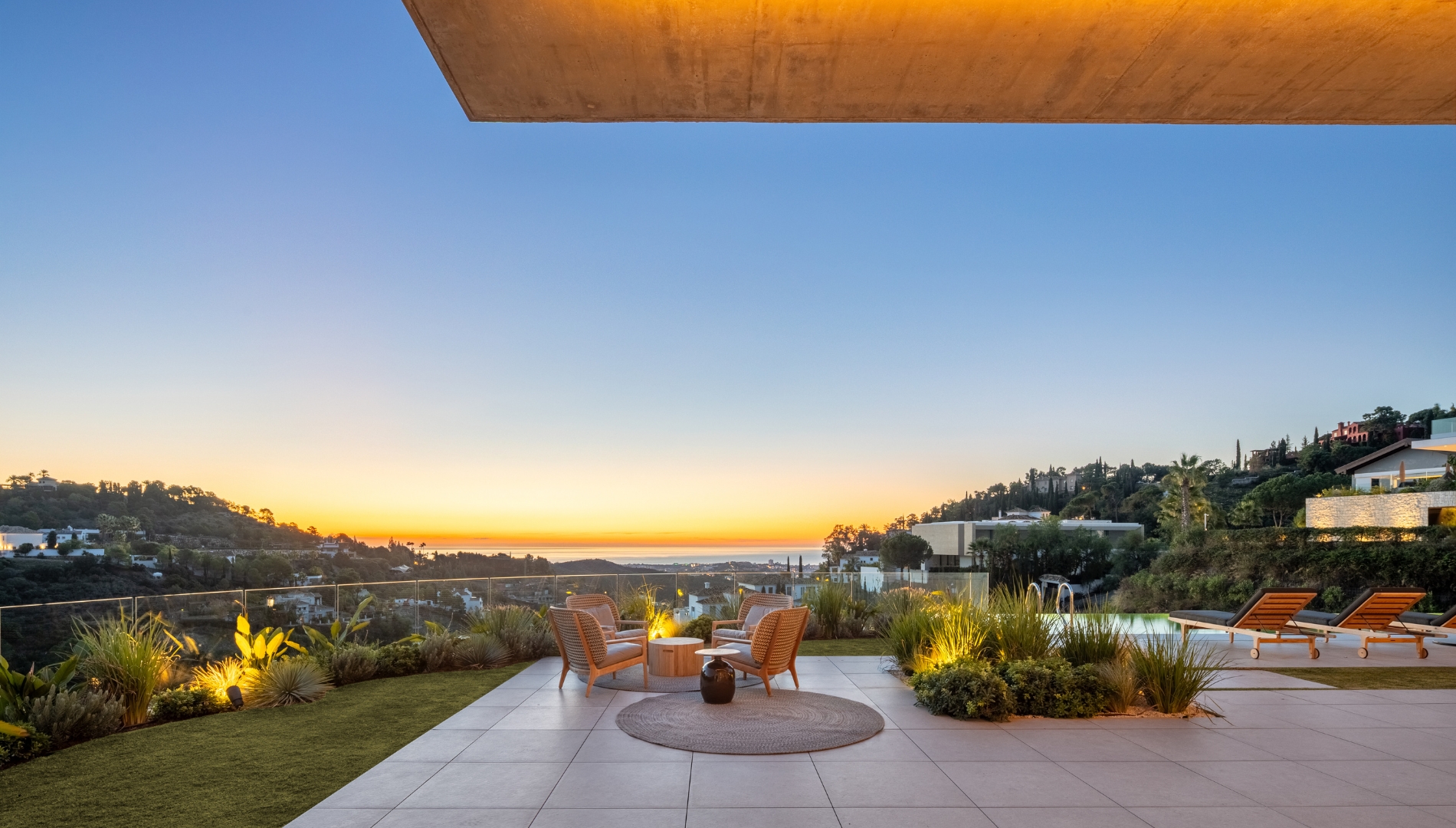
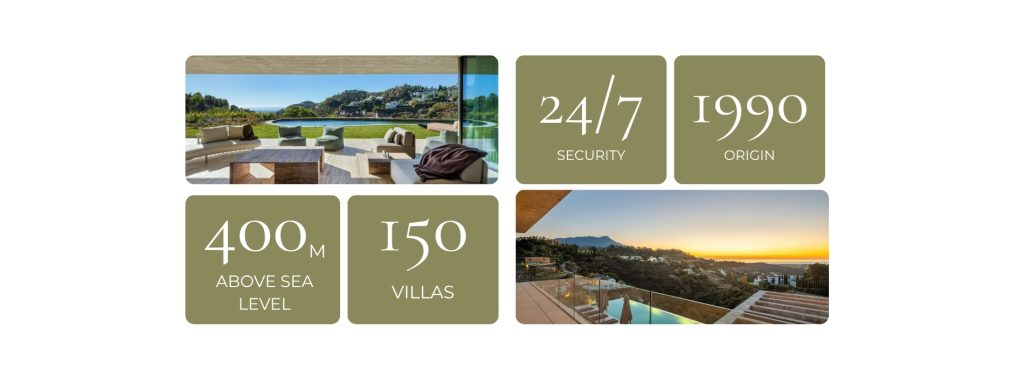
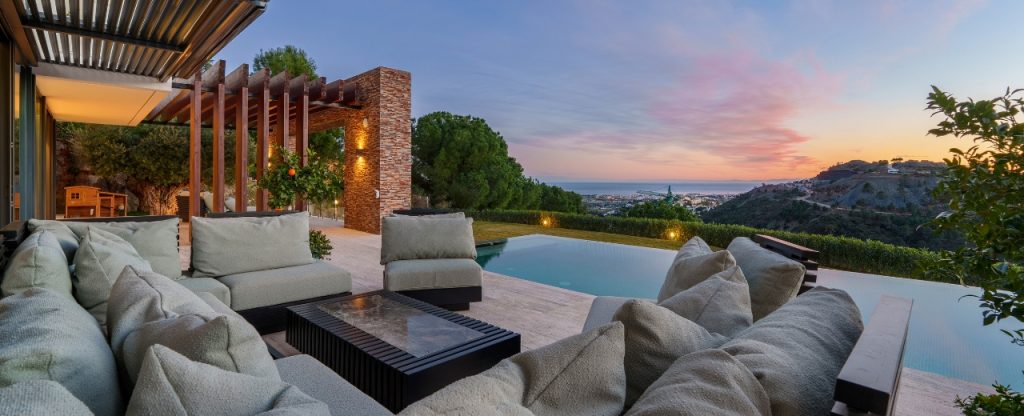
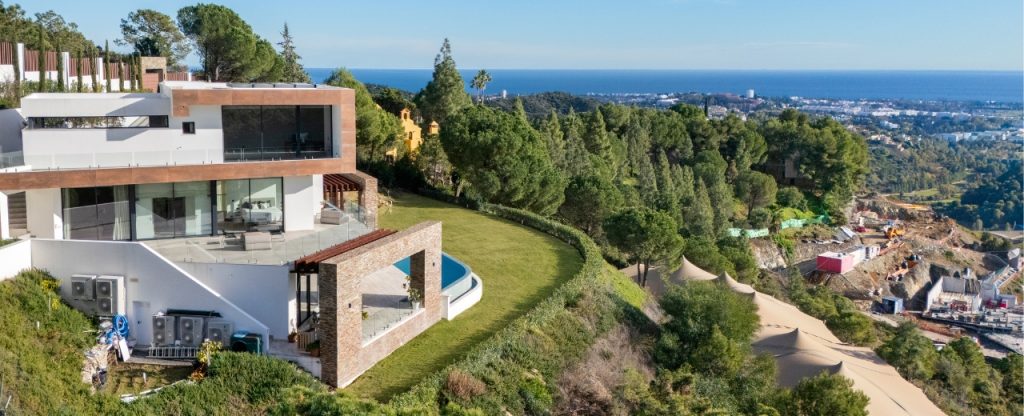
At 400 metres above sea level, in the hills of Benahavís next to La Zagaleta, El Madroñal is one of the most discreet gated communities on the Costa del Sol. Its 150 villas occupy large plots surrounded by pine and cork oak forests, with six controlled entrances, 24-hour security and views of the Mediterranean. It is an enclave known as “the best-kept secret on the Costa del Sol”.
El Madroñal was originally a private hunting estate whose name comes from the strawberry trees that still dot its landscape today. Since it was transformed into a residential development in the 1990s, it has become a chosen retreat for international families, figures from the worlds of film and music, and executives seeking complete privacy only a few minutes from the bustle of Marbella.
El Madroñal at a Glance
- What to expect: absolute privacy, 24/7 security and a unique natural setting, surrounded by pine and cork oak forests just 10 minutes from Marbella.
- The lifestyle: discreet and family-oriented, with large villas on generous plots, ideal for those seeking tranquility, a close connection with nature and an established community.
- What not to expect: you won't find shops, restaurants or social life within the urbanization. El Madroñal is a purely residential area.
- The market: limited supply and high demand. Detached villas on large plots dominate, with styles ranging from classic Andalusian to contemporary signature architecture.
- You'll fall in love with: the Mediterranean views from the mountainside, the absolute silence, and the feeling of living in a natural haven without giving up proximity to Marbella.
→ View all our available properties in El Madroñal.
Location
Boundaries and accessibility
El Madroñal is located within the municipality of Benahavís, on the eastern slope of the Sierra de las Nieves, beside the A-397 road connecting San Pedro de Alcántara with Ronda. It borders La Zagaleta to the west, La Heredia to the east and Sierra de las Nieves Natural Park to the north, providing a protected setting of considerable ecological value.
The development is organised into six phases, each with its own independent entrance and 24-hour security. It is accessed from the A-7 or AP-7 by taking exit 172 towards San Pedro Oeste / Ronda and continuing along the A-397 for approximately 10 minutes. Málaga Airport is around 45 minutes away, while Gibraltar Airport is just over an hour away.
| Destination |
Approximate travel time |
| Benahavís Village |
12 min |
| San Pedro de Alcántara |
10 min |
| Puerto Banús |
18 min |
| Marbella Centre |
20 min |
| Málaga Airport (AGP) |
45 min |
Lifestyle
Living in El Madroñal means prioritising privacy, nature and tranquillity. The development has no shops or restaurants within its boundaries, an intentional part of its design: this is a place for switching off. Yet San Pedro de Alcántara and Puerto Banús are only 10 minutes away by car, placing the full range of Costa del Sol amenities within easy reach. This combination of seclusion and proximity has made El Madroñal a chosen retreat for international families and prominent figures seeking complete tranquillity without sacrificing proximity to Marbella.
Nature and hiking
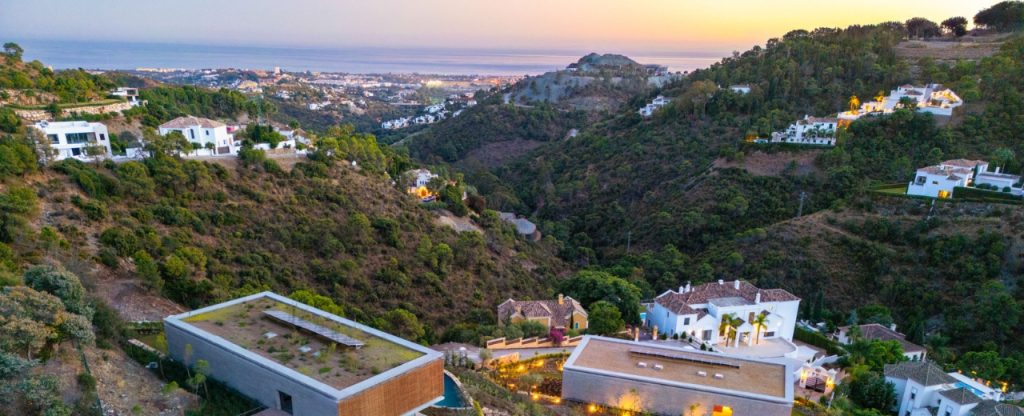
The 223 hectares of El Madroñal are surrounded by pine and cork oak forests. Sierra de las Nieves Natural Park, declared a National Park in 2021, is also very close. It is common to see deer and wild boar crossing between the plots, while hiking routes begin directly from the development. The Guadaiza River, at the foot of the community, forms a natural boundary with La Zagaleta and adds scenic value. For nature enthusiasts, this is one of the few places on the Costa del Sol where wildlife forms part of the everyday landscape.
Golf
Although there is no golf course within the development, El Madroñal is surrounded by some of the finest courses on the Costa del Sol. La Zagaleta Golf, immediately next door, is private and available only to residents or guests. Less than 15 minutes away are Los Arqueros Golf Club, designed by Seve Ballesteros, and La Quinta Golf & Country Club. Las Brisas, Los Naranjos, Aloha and La Cerquilla are also nearby in the Golf Valley. It is an ideal location for golfers who want several options without having to travel far.
Nearby leisure and services
Although El Madroñal is a purely residential sanctuary, everything is close at hand. Benahavís Village, 12 minutes away, offers an extensive selection of restaurants for its size, partly thanks to its historic hospitality school. Very close to the development itself, on the Ronda road, we particularly recommend Alcuzcuz Gallery. This charming restaurant occupies an estate overlooking the valley, with summer terraces and Spanish cuisine based on charcoal grilling and produce from its own gardens. It is perfect for a peaceful dinner with a view.
San Pedro de Alcántara offers a more local way of life, with a market, boutiques and an Andalusian atmosphere. Puerto Banús is 18 minutes away, with its designer shops, restaurants and nightlife. In the other direction, the Ronda road provides access to the inland areas and their spectacular landscapes in 40 minutes.
Families and schools
El Madroñal is highly valued by international families who live on the Costa del Sol throughout the year. Its security, large garden plots and natural surroundings make it an ideal place for family life. Several of the area’s leading international schools are only a few minutes away: Atalaya International School in Estepona, Laude San Pedro International College, Aloha College in Nueva Andalucía and The British International School of Marbella. You can find complete information about local schools in our complete guide.
The Property Market
El Madroñal is one of the most distinctive property markets on the Costa del Sol. Its supply combines completed villas with plots that are still available for construction, something increasingly rare in Marbella’s prime areas. Demand remains constant due to the profile of buyers seeking complete privacy within an established gated community.
Property profile
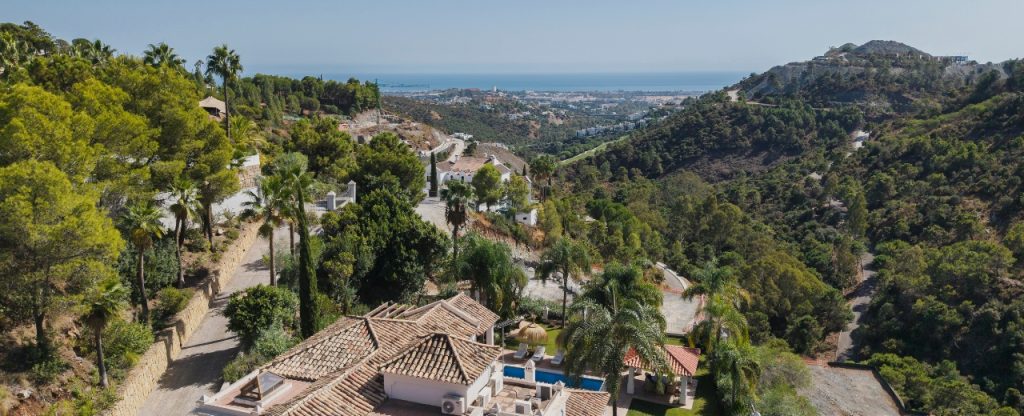
El Madroñal is dominated by large detached villas, with an average built area of approximately 866 m² on spacious plots of around 5.000 m². The minimum permitted plot size is 2.600 m², except in Phase 1, where plots are even larger. Architectural styles vary considerably: traditional Andalusian country estates coexist with classical Mediterranean mansions and contemporary villas designed by architects such as César de Leyva and Marcio Kogan. Unlike other developments where no further land is available, El Madroñal still offers plots for bespoke construction, something increasingly exceptional in the prime segment.
Prices and trends
In 2026, the average sale price in El Madroñal is approximately 4,7 million euros, with an average price per square metre of around 6.175 €/m². Most available villas range from 4 to 11 million euros, while new developments and homes designed by renowned architects achieve higher figures. Building plots average 210 €/m², with the smallest available plot starting at 2.750 m² and the largest reaching 15.000 m². Supply is limited by design, while appreciation is supported by the natural protection of the surroundings and the low building density.
Buyer profile
Buyers in El Madroñal are predominantly international: British, Scandinavian, Dutch and German, with buyers from the Middle East representing a growing share. They are often families seeking a main residence or an established second home, executives, figures from the entertainment industry and people who value privacy above everything else. Many transactions are completed discreetly without reaching the open market, which is characteristic of communities of this kind.
A solid investment
El Madroñal offers something unusual in Marbella’s prime areas: the opportunity to purchase a completed villa or acquire a plot for a bespoke construction project, something that is now virtually impossible in La Zagaleta or Sierra Blanca. Its position between La Zagaleta and Sierra de las Nieves Natural Park, together with its gated-community status, helps preserve its character and value over time.
The Origins
From hunting estate to residential community
Before becoming one of the most discreet addresses on the Costa del Sol, El Madroñal was a private estate used for hunting and grazing. It covered 223 hectares of Mediterranean forest in the foothills of the Sierra de las Nieves, with abundant pine trees, cork oaks and, above all, strawberry trees, the native tree that would eventually give the enclave its name.
The Parladé family and the transformation of the estate
The estate originally belonged to the Parladé family, a historic name linked to the aristocracy and Marbella’s first luxury developments. In the late 1970s, El Madroñal S.A. was established with Anglo-Spanish capital and began converting the estate into a high-end residential community. The vision was clear from the outset: low density, large plots and maximum respect for the natural environment. Over the years, the estate also passed into the hands of international figures such as Thierry Roussel, the French businessman who was married to Christina Onassis. This helped establish its reputation within international circles.
A phased development
El Madroñal was planned from the outset as a community organised into six phases, each with its own independent entrance. Phase 1, the oldest, included the largest plots, with an original minimum size of 5.000 m². Later phases retained a minimum of 2.600 m², which was sufficiently generous to preserve privacy and avoid the feeling of a densely developed community. This careful planning, together with the predominantly Andalusian architecture of its early years, has allowed El Madroñal to retain a balance between stately villas and the natural environment.
A legacy of discretion
More than three decades after its creation, El Madroñal remains faithful to its original philosophy. Although contemporary villas designed by international studios have gradually appeared, the essence of the community remains the same: villas separated by woodland, sea views and such discretion that the development has become a retreat for figures from the worlds of film, music and business who value, above all, remaining out of sight.
Fun Facts
The name comes from a tree
The development takes its name from the strawberry tree, a small tree native to the Mediterranean forest that can still be found throughout the estate. Its fruit, which closely resembles small strawberries, has a slight ability to ferment and can cause intoxication if eaten in large quantities.
The Onassis connection
The estate’s historic owners include Thierry Roussel, a French businessman who was married to Christina Onassis, daughter of the famous Greek magnate Aristotle Onassis. This detail has helped reinforce the area’s aura of international exclusivity.
Four-legged neighbours
It is common to see deer, wild boar and foxes moving between the villas, and some owners say they have become part of the everyday landscape. The proximity of Sierra de las Nieves Natural Park means that wildlife is a natural part of daily life.
A valley without advertising hoardings
Unlike other parts of Marbella, El Madroñal has no visible advertising signs or commercial hoardings. Internal regulations prohibit any element that disrupts the visual harmony of the surroundings, to the extent that even estate agencies cannot advertise within the development.
Plots are still available
In a market such as Marbella, where almost no undeveloped land remains in the finest residential communities, El Madroñal still provides the opportunity to purchase plots for bespoke construction. This is an increasingly rare and highly valued exception in the prime segment.
Frequently Asked Questions
Where is El Madroñal located?
El Madroñal is located within the municipality of Benahavís, on the eastern slope of the Sierra de las Nieves, beside the A-397 road connecting San Pedro de Alcántara with Ronda. It borders La Zagaleta to the west and La Heredia to the east, approximately 10-15 minutes by car from San Pedro and Puerto Banús.
What types of properties are available in El Madroñal?
Large detached villas predominate, with an average built area of 866 m² and plots ranging from 2.600 to more than 10.000 m². Styles range from traditional Andalusian country estates to contemporary villas designed by international architects. El Madroñal is also one of the few prime residential communities in the area where building plots are still available.
How many phases does El Madroñal have?
The development is organised into six phases, each with its own independent entrance and 24-hour access control. Phase 1 is the oldest and has the largest plots, originally starting from 5.000 m², while the later phases retain a minimum size of 2.600 m².
Does El Madroñal offer sea views?
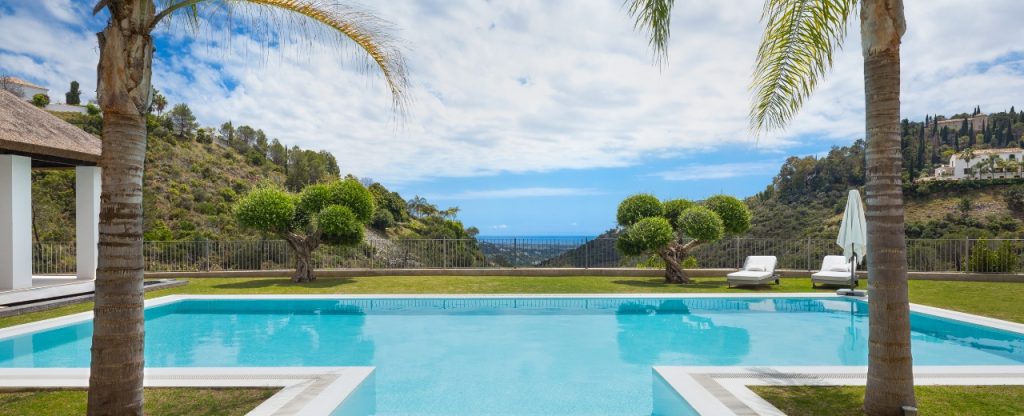
Yes. Thanks to its elevated position, 400 metres above sea level, many properties enjoy panoramic views of the Mediterranean, the surrounding mountains and even Gibraltar and the African coastline on clear days.
Is El Madroñal secure?
Yes. It has six independent entrances, all with 24-hour access control, as well as security patrols within the community. Its gated nature and low building density reinforce the sense of tranquillity and privacy.